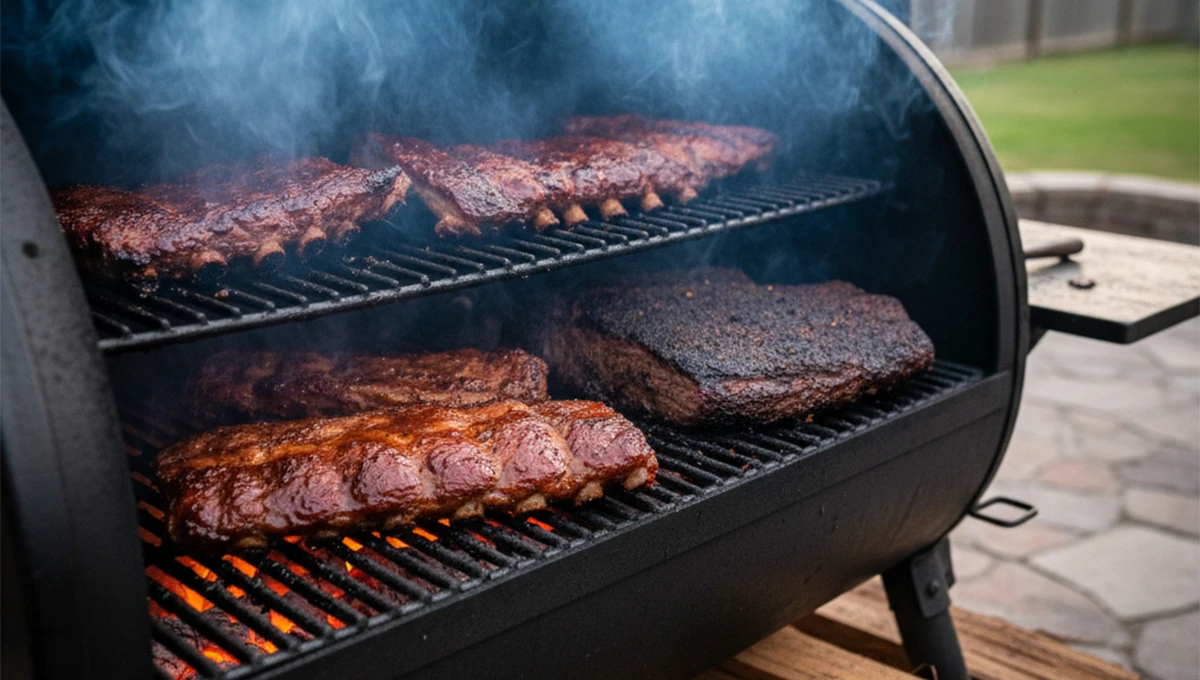
Low and slow BBQ isn’t just a cooking method—it’s a philosophy. It’s about patience, precision, and respect for the process. Much like military training, mastering low and slow takes discipline, but the rewards are worth every minute.
Whether you’re a rookie griller or a seasoned pitmaster, this guide will teach you the fundamentals of low and slow cooking that separate good BBQ from legendary BBQ.
What is Low and Slow BBQ?
Low and slow refers to cooking meat at low temperatures (225-275°F) over extended periods (several hours to all day). This method breaks down tough connective tissue in meat, rendering fat and creating that fall-off-the-bone tenderness we all crave.
Why it works:
- Collagen in meat breaks down into gelatin around 160-180°F
- Fat renders slowly, basting the meat from inside
- Smoke penetrates deeply for maximum flavor
- Moisture is retained, preventing dry meat
Best cuts for low and slow:
- Beef brisket
- Pork shoulder (pulled pork)
- Pork ribs (baby back and spare ribs)
- Beef ribs
- Whole chicken
- Pork belly
The Three Pillars of Low and Slow
1. Temperature Control
Target zone: 225-275°F
This is your sweet spot. Lower than 225°F and you risk bacteria growth and never-ending cook times. Higher than 275°F and you’re essentially roasting, not true low and slow.
How to maintain temperature:
- Use a reliable thermometer (analog grill thermometers lie)
- Adjust vents on charcoal smokers to control airflow
- Add fuel gradually, not in huge batches
- Avoid opening the lid—every peek adds 15-30 minutes
- Use a water pan to stabilize temperature and add moisture
Pro tip: Set up a two-zone fire—direct heat on one side, indirect on the other. Cook meat on the indirect side.
2. Time Management
The golden rule: It’s done when it’s done, not when the clock says so.
Low and slow can’t be rushed. Trying to speed it up by cranking the heat will give you tough, dry meat.
Estimated cook times:
- Baby back ribs: 4-5 hours at 225°F
- Spare ribs: 5-6 hours at 225°F
- Pork shoulder: 1.5-2 hours per pound at 225°F
- Beef brisket: 1-1.5 hours per pound at 225°F
- Whole chicken: 3-4 hours at 250°F
Understanding “The Stall”:
Around 150-170°F internal temp, meat temperature stops rising for hours. This is normal—moisture evaporates and cools the surface. Don’t panic. Power through it, or wrap in foil/butcher paper to push past it faster (called the Texas Crutch).
3. Smoke and Flavor
Wood matters:
Different woods create different flavors:
- Oak: Mild, versatile, great for beef
- Hickory: Strong, bacon-like, classic BBQ flavor
- Apple: Sweet, fruity, perfect for pork and poultry
- Cherry: Mild, sweet, beautiful color
- Mesquite: Intense, bold, use sparingly
- Pecan: Rich, nutty, similar to hickory but milder
Smoke management:
- Use dry, seasoned wood (not green or wet)
- Thin blue smoke is good; thick white smoke is bitter
- Meat stops absorbing smoke after 2-3 hours
- Less is more—you can always add, can’t subtract
The Low and Slow Process: Step by Step
Step 1: Prep Your Meat
- Trim excess fat (leave ¼ inch)
- Remove membrane from ribs
- Pat meat completely dry
- Apply rub 30 minutes to overnight before cooking
- Bring to room temp 1 hour before cooking
Step 2: Set Up Your Cooker
- Preheat to target temperature
- Set up two-zone fire
- Add water pan for moisture
- Add wood chunks or chips
- Stabilize temperature before adding meat
Step 3: Monitor, Don’t Meddle
- Insert probe thermometer into thickest part
- Avoid opening lid unnecessarily
- Monitor smoke color—thin and blue
- Add fuel as needed to maintain temp
- Be patient through the stall
Step 4: Know When It’s Done
Don’t rely on time alone. Use these tests:
Temperature test:
- Pork shoulder: 195-205°F
- Brisket: 195-205°F
- Ribs: 190-203°F
- Chicken: 165°F (breast), 175°F (thigh)
Probe test: Insert a probe or skewer. It should slide in like butter with no resistance.
Bend test (ribs): Pick up ribs with tongs from the middle. They should bend and crack slightly but not fall apart.
Step 5: Rest Your Meat
Never skip the rest.
Remove meat and let it rest:
- Ribs: 10-15 minutes
- Pork shoulder: 30-60 minutes
- Brisket: 30-60 minutes (wrapped in towel in cooler can hold 2-4 hours)
Resting allows juices to redistribute. Cutting too soon = dry meat.
Common Low and Slow Mistakes (And How to Avoid Them)
Mistake 1: Using the Wrong Cut
The fix: Not all meat is made for low and slow. You need cuts with connective tissue and fat—brisket, pork shoulder, ribs. Lean cuts like pork loin will dry out.
Mistake 2: Cooking Too Hot
The fix: Patience. Keep temps at 225-275°F. If you’re in a rush, low and slow isn’t for you.
Mistake 3: Too Much Smoke
The fix: Thin blue smoke, not billowing white clouds. Over-smoking makes meat bitter.
Mistake 4: Opening the Lid Too Much
The fix: “If you’re lookin’, you ain’t cookin’.” Every peek adds time and drops temperature.
Mistake 5: Not Using a Thermometer
The fix: Invest in a good digital probe thermometer. Guessing is gambling.
Mistake 6: Saucing Too Early
The fix: Add sauce in the last 30-60 minutes max. Earlier and the sugars burn.
Mistake 7: Cutting Immediately
The fix: REST YOUR MEAT. Seriously. This is non-negotiable.
Low and Slow Without a Smoker
Don’t have a smoker? No problem.
Oven Method:
- Cook at 275°F in roasting pan
- Cover tightly with foil or lid
- Add liquid smoke to rub or cooking liquid
- Won’t have smoke ring but still tender and delicious
Slow Cooker Method:
- Great for pork shoulder and ribs
- Add liquid smoke to cooking liquid
- Low for 8-10 hours
- Finish under broiler for bark
Gas Grill Method:
- Set up two-zone fire
- Use smoker box with wood chips
- Keep indirect side at 225-250°F
- Place water pan between heat and meat
When to Apply Barracks BBQ Sauce
Timing matters with BBQ sauce:
For glazing during cook: Apply Smokin’ Soldier or Blazin’ Battle in the last 30-45 minutes of cooking. Brush on thin layers every 10-15 minutes for a sticky, caramelized finish.
For serving: Keep sauce on the side so everyone controls their own flavor level.
For pulled pork: Toss shredded meat with sauce after pulling apart.
Pro tip: Mix sauce with pan drippings for extra depth.
Your Low and Slow Checklist
Before you start your next low and slow session, make sure you have:
- Quality meat with good marbling
- Dry rub applied and ready
- Fuel (charcoal, wood, or propane)
- Wood chunks or chips for smoke
- Reliable thermometer
- Water pan
- Patience (most important ingredient)
- Barracks BBQ sauce for finishing
- Cold beverages for the wait
- Backup plan for dinner if things run long
Final Mission Brief
Low and slow BBQ is about more than just cooking meat—it’s about the journey. It teaches patience, builds skill, and rewards dedication. Much like military service, it’s not always easy, but the results are worth the effort.
Start with something forgiving like pork shoulder or ribs. Master the basics. Learn from each cook. And remember: every pitmaster started somewhere.
Your mission, should you choose to accept it: Pick a cut, fire up your cooker, and commit to the process. We’ll be here with the sauce when you’re ready.
Ready to Start Your Low and Slow Journey?
Shop our sauces perfect for low and slow BBQ:
- Smokin’ Soldier Mild BBQ Sauce – Classic finish for ribs and pork
- Blazin’ Battle Spicy BBQ Sauce – Bold heat for brisket and chicken
Leave a Reply